Starting A Subscription Box For Mom Self‑Care Kits From Home Success

Launching a subscription box for mom self‑care kits from home can feel both exciting and overwhelming. Between juggling family, chores, and work, finding a way to help other moms slow down and recharge is a rewarding path. Starting a home-based self-care box gives busy moms a chance to build a flexible business that supports wellness and provides steady income.

She can begin small—curating bath salts, teas, candles, or journals that promote relaxation. Offering themed boxes like “Restful Evenings” or “Morning Calm” can connect with moms looking for simple ways to care for themselves. Creating a few prototype boxes using low-cost suppliers outlined in guides like How To Start A Self Care Box Business helps refine her idea and test what customers enjoy.
When she’s ready, she can set up a subscription model using digital tools that manage monthly sign‑ups and deliveries. Sharing real stories of motherhood and self‑care on social media turns followers into loyal subscribers. With consistency and creativity, this side hustle can grow into a meaningful brand that celebrates the power of rest and renewal.
Key Takeaways
- Build a flexible home business helping moms enjoy simple self-care moments.
- Test small, refine box themes, and use easy tools to manage subscriptions.
- Share personal stories and keep consistency to grow a lasting customer base.
Understanding the Self-Care Subscription Box Market

The self-care subscription box market has grown fast as more people look for ways to take care of their mental and emotional health at home. This growth opens opportunities for small business owners—especially moms—to build steady income while helping others recharge.
What Is a Self-Care Subscription Box?
A self-care subscription box is a monthly package filled with wellness and relaxation products chosen to help customers slow down and de-stress. These boxes often include candles, teas, skincare items, journals, or aromatherapy blends. For moms, it might also include quick pamper items that fit into busy days—like bath salts for a 10-minute soak or a snack for alone time.
Many sellers build their boxes around a theme such as “mindful mornings” or “bedtime calm.” A simple way to start is by making a list of five product types in a table:
| Product Type | Example Item | Purpose |
|---|---|---|
| Skincare | Face mask | Refresh tired skin |
| Aromatherapy | Essential oil roller | Reduce stress |
| Snacks | Herbal tea or dark chocolate | Provide comfort |
| Journaling | Mini gratitude notebook | Encourage reflection |
| Accessories | Cozy socks | Add warmth and ease |
Anyone creating a self-care subscription box can start small by testing samples with friends, gathering feedback, and refining each month’s theme.
Trends and Opportunities in the Subscription Box Business
The self-care subscription box market is expected to grow from USD 1.5 billion in 2024 to USD 4.2 billion by 2033, showing strong demand for personalized wellness experiences (Verified Market Reports). People want more than products—they want moments of calm sent to their doorstep.
For home-based entrepreneurs, this growth means it’s a good time to step in. They can choose to sell through platforms like Cratejoy, which makes setup easier with built-in tools for managing monthly subscriptions and payments.
To stand out, a mom can:
- Focus on personal touches, like a handwritten thank-you note.
- Offer budget-friendly trial boxes.
- Use social media to show behind-the-scenes packing moments, which helps customers connect with the brand.
Even with limited space and time, moms can test kits locally before scaling online.
Popular Brands for Moms
Some of the most loved self-care boxes for moms include TheraBox, Boxy Momma, and Allure Beauty Box. Each one uses a different approach.
- TheraBox blends psychology and self-care, curating items that support mindfulness.
- Boxy Momma focuses on humor and realistic mom self-care, making it relatable.
- Allure Beauty Box appeals to moms who want to try high-end beauty products at affordable prices.
By studying how these brands communicate and package their monthly subscription boxes, small business owners can learn what makes customers feel valued. Creating a simple plan—such as offering limited edition “Mom’s Night In” kits for holidays or gift subscriptions—can help build a loyal subscriber base looking for gifts for moms that feel thoughtful and useful.
Defining Your Target Market and Unique Value
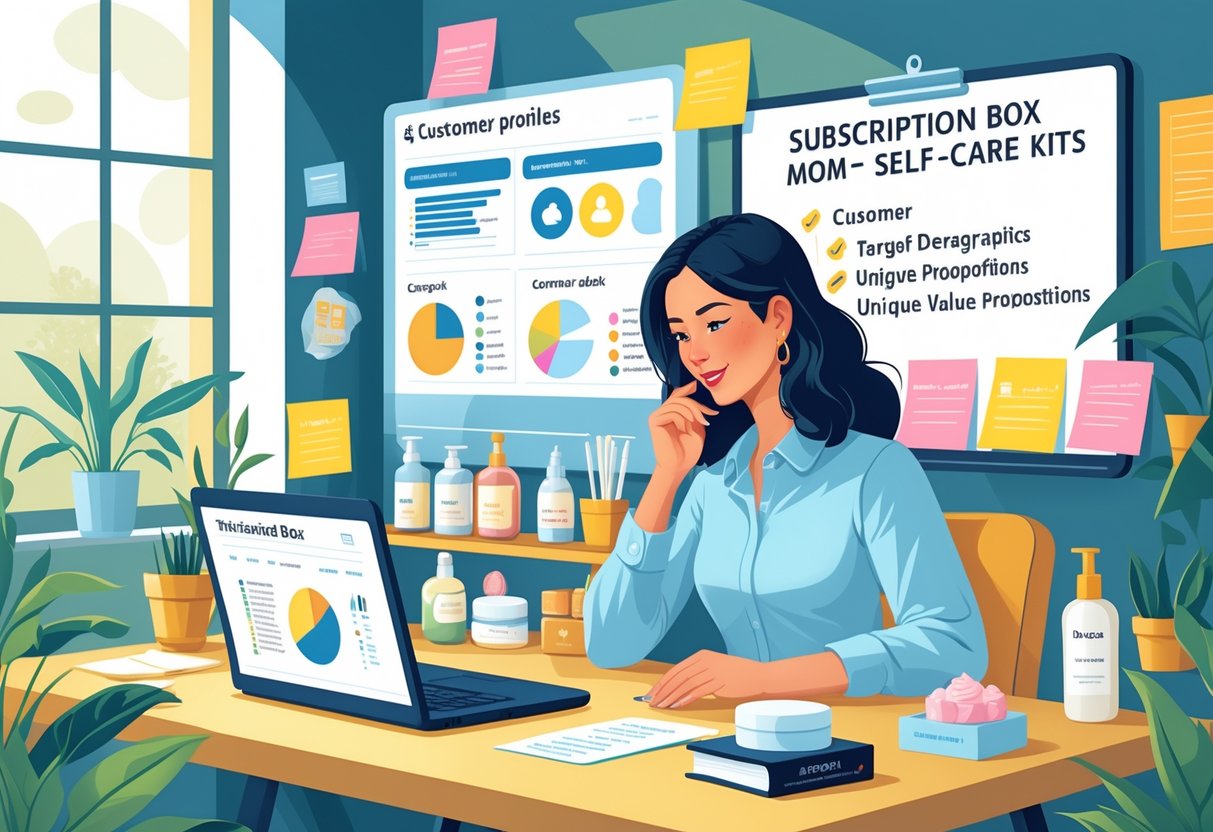
Strong self-care box brands understand who they serve and why customers choose them. They combine empathy with smart research to build boxes that feel personal while standing out in a crowded market.
Identifying Your Ideal Mom Subscriber
Every successful self care subscription box starts with a clear picture of its customer. When business owners define their target market precisely, they can tailor products and messages that truly connect. For a mom-focused box, age, parenting stage, and daily stresses matter most.
Moms with toddlers often crave quiet moments—think calming teas and quick skincare—and value fast, fuss-free products. Moms of teens may look for emotional wellness tools like journals or aromatherapy. Use a short table to map it out:
| Mom Type | Main Challenge | Ideal Product Type |
|---|---|---|
| New Mom | Exhaustion, time limits | Quick pampering items |
| Working Mom | Work-life balance | Stress relief kits |
| Stay-at-home Mom | Routine burnout | Energizing skincare, self-care prompts |
Gather data through polls in mom Facebook groups or short surveys in local parenting communities. Free tools like Google Forms or Typeform make this easy.
Creating a Unique Selling Proposition
A strong unique selling proposition (USP) shows what makes one box special among all the others. According to Subi’s guide on writing a subscription box business plan, it helps define a brand’s distinct message and curates products that match it.
For a self care subscription, focus on what moms truly need, not what’s trendy. Some boxes emphasize eco-friendly goods, while others highlight time-saving routines or cultural representation.
A simple template helps:
- Promise – “Helps moms reclaim five minutes of peace.”
- Proof – “Curated by moms who test every product.”
- Payoff – “Your monthly break from chaos.”
Keep this message consistent on packaging, emails, and social posts. It builds trust through familiarity.
Market Analysis for Mom Self-Care Kits
A basic market analysis shows the size of the market, competition, and pricing trends. EasySubscription.io’s step-by-step guide suggests reviewing competitor boxes, shipping costs, and customer reviews before launch.
Start by listing 3–5 competitors. Note their price range, product themes, and the frequency of shipment. Then look for gaps. Maybe few offer seasonal self-care themes or affordable starter boxes.
Free research tools like Google Trends and Instagram hashtags reveal what moms talk about. Popular searches for “mom self-care” or “burnout relief” point to real demand. When these insights shape box design and pricing, the business grows from a clear understanding—not guesswork.
Building Your Business Plan
A well-organized plan helps define the box’s theme, cost, and comfort level for busy moms. It also keeps track of legal tasks like choosing a business name, setting up an LLC, and securing licenses and permits so the business runs smoothly from home.
Writing a Comprehensive Subscription Box Business Plan
Every successful home-based venture starts with a clear subscription box business plan. It helps track goals, budgets, and daily tasks while preparing for growth. A simple structure includes:
| Section | Purpose |
|---|---|
| Vision and Mission | Describe why the box exists and who it helps. |
| Target Audience | Define the type of mom who would buy or gift the box. |
| Product Sourcing | List self-care items, suppliers, and costs. |
| Pricing and Budget | Outline monthly expenses, box price, and profit margin. |
| Marketing Plan | Explain social media, email, and influencer outreach. |
She can find helpful templates and examples from guides like Craft an irresistible self-care box business plan now!.
Starting simple works best. Many moms sketch their ideas on paper or in a shared document, updating it as they go. What matters most is understanding the market, staying organized, and identifying the unique value her boxes bring.
Choosing a Business Name and Registering Your Business
Picking the right business name builds recognition and sets the tone for the brand. A calm, inviting name like “Mornings for Mom” or “Peace & Parcel” can instantly connect with the target audience. Before settling on one, she should:
- Search online and check domain availability.
- Look through state or national databases to avoid duplicates.
- Test the name with friends or potential customers.
Once she finds a name she loves, she should register the business with local or state authorities. Resources such as How to Start A Selfcare Subscription Box? explain the basics of registration and setup.
After registering, she can open a business bank account to keep finances separate. Even from home, this small step shows legitimacy and builds trust when working with vendors and customers.
Selecting a Legal Structure
Choosing the right legal structure affects taxes, liability, and control. Many small, home-based owners prefer a Limited Liability Company (LLC) because it separates personal and business finances. It’s simple to manage and offers some protection from personal risk.
Here’s a quick look at common structures:
| Type | Description | Best For |
|---|---|---|
| Sole Proprietorship | Easiest to start; owner has full control. | Beginners testing the idea. |
| LLC | Protects personal assets; simple tax setup. | Home-based businesses with regular sales. |
| Corporation | Complex; often suits larger companies. | Growing ventures seeking investors. |
Good guides like How To Start A Self Care Box Business explain how structure choices shape finances and daily management. Taking time to decide early prevents problems later.
Securing Licenses and Permits
Even small home-run subscription boxes must meet local rules. Depending on location, she may need a home occupation permit or basic business license. If she stores or ships self-care items, a resale permit could also be required.
Each city and state sets its own rules. It’s smart to check government websites before launching or shipping products. Platforms like How to Start a Subscription Box Business: Step-by-Step Guide outline the types of licenses common in the subscription industry.
Moms can create a short checklist of what permits apply to their situation:
- Home-based business license
- Resale or seller’s permit
- Health or product permits if selling handmade goods
Getting licensed early means no surprises later, and it strengthens trust with partners and customers who expect professionalism, even from a cozy home office.
Sourcing Products and Creating Memorable Boxes
Moms appreciate self‑care items that feel thoughtful, useful, and easy to enjoy even on busy days. Choosing the right products, creating a visually appealing presentation, and organizing smooth delivery make every package feel like a small act of care.
Finding Great Self-Care Products Moms Will Love
Start with everyday self‑care needs—soothing candles, calming teas, aromatherapy oils, and bath salts. Aim for products that are gentle, safe, and ethically made. Small brands often offer high‑quality goods and love partnering with subscription boxes to reach new customers.
Use a simple checklist when choosing items:
- Smell: Does the scent relax or refresh?
- Purpose: Does it help relieve stress or promote rest?
- Size: Will it fit neatly in the box?
She could source in bulk from marketplaces that support handmade goods or connect directly with artisans at local fairs. Blogs like DIYPack’s guide to growing your subscription box highlight how building supplier relationships early can help secure better pricing and exclusivity.
Designing a Standout Unboxing Experience
The joy starts when moms open the box. Packaging should invite them to slow down. She might line the box with tissue paper in soft colors, like lavender or cream, and add a short message card explaining each product and how to use it.
A clear structure keeps the box neat and beautiful:
| Layer | Contents |
|---|---|
| Top | Welcome note + product list |
| Middle | Featured items (e.g., candle, lotion) |
| Bottom | Bonus treat or small sample |
Adding small surprises—like a single flower stem or self‑care affirmation—turns a normal delivery into something more personal. A Cratejoy guide on creating memorable boxes recommends using branded touches such as stickers or ribbon to increase repeat excitement.
Managing Packaging and Shipping Logistics
Running operations from home means balancing cost, storage, and shipping time. She can begin with small batches to test shipping methods before scaling. Lightweight materials like paper filler help protect items while keeping postage low.
Schedule packing days in advance. Set up a simple table system: one box for assembly, one for quality check, and one for ready‑to‑ship items. Tools like reusable labels or online postage services make the process faster.
To keep things efficient, ShipScience’s step‑by‑step advice suggests comparing carriers regularly and printing labels at home to avoid long post office trips. With this routine, each candle subscription or self‑care kit reaches moms on time—and in perfect condition.
Setting Up Subscription Management and Operations
Running a mom self‑care box from home takes both heart and structure. Smooth tools, clear pricing, and reliable support help everything run without stress so she can focus more on creativity and customers instead of constant tech trouble.
Choosing Your Subscription Platform from Home
A mom starting from home needs a platform that fits her comfort level and workload. Tools like Cratejoy or WooCommerce Subscriptions work well because they handle payments, renewals, and analytics automatically. This automation saves time, especially when juggling kids’ schedules and daily chores.
When comparing tools, look at:
| Feature | Why It Matters |
|---|---|
| Ease of setup | Reduces frustration for beginners |
| Customer management | Keeps track of active, paused, and canceled boxes |
| Shipping integrations | Links orders to printing labels easily |
| Support options | Chat or email access helps fix issues fast |
She can test using free trials before committing. A clean dashboard and clear reports make it easier to track subscribers and forecast income—key parts of smart subscription management. Starting simple often leads to fewer errors and better growth later.
Setting Subscription Terms and Pricing
Clear terms of service protect both her and her customers. They should explain billing dates, renewal cycles, and cancellation policies in plain language. Moms can create a basic terms template and tweak it as the business grows.
Setting a fair price means balancing costs and value. A simple spreadsheet or subscription box financial model helps track:
- Product cost per box
- Packaging and shipping fees
- Platform or payment fees
- Target profit margin
For a home business, starting small—perhaps offering monthly and quarterly billing plans—builds trust with new customers. Prices should also reflect consistent quality rather than racing to stay cheapest. Transparency about billing keeps subscribers feeling secure and cared for.
Managing Orders and Customer Service
Order tracking and good communication keep customers happy. Even a few mistakes in shipping or delays can break trust. Using tools that sync with fulfillment and email updates avoids confusion.
A mom can set up a simple weekly routine:
- Monday: Check payment renewals and flagged orders.
- Wednesday: Prep and pack new boxes.
- Friday: Send tracking emails and follow up.
Friendly and fast customer replies matter more than fancy words. Keeping a short list of common responses for refund or shipping questions can save time. As described in the Complete Guide for Beginners, reliable customer service builds long‑term loyalty and helps small businesses grow steadily.
Marketing Your Mom Self-Care Kit Subscription
A clear plan helps turn word-of-mouth buzz into steady subscriptions. Staying consistent with brand values, knowing what moms truly need, and building relationships that feel real all make a lasting impact.
Crafting a Practical Marketing Strategy
She should first define her target market. For mom self-care boxes, that often means busy mothers looking for small, relaxing moments. A simple customer avatar might include a mom in her 30s juggling work, home, and kids who values natural, affordable wellness.
She can study top boxes like TheraBox or Boxy Momma for ideas on pricing, packaging, and customer engagement. Their websites and social pages show how personal stories and clean photos build trust.
A simple weekly marketing plan might look like this:
| Day | Focus | Example Task |
|---|---|---|
| Monday | Social post | Share a behind-the-scenes photo |
| Wednesday | Send a mini self-care challenge | |
| Friday | Engagement | Respond to every comment or message |
She can test different offers, such as “first box half off,” to see what leads to more sign-ups. Tracking basic numbers like clicks and shares helps her spot what works best.
Building a Community Around Your Box
Subscribers feel loyal when they connect with each other and the brand. Encourage that by creating a Facebook group or chat where moms share self-care tips or show how they use items from past boxes.
Adding a personal touch helps too. Simple handwritten thank-you notes or short video messages show appreciation. A poll in an email asking what scent or product type they want next gives customers a voice.
Storytelling deepens the bond. She can share how her own need for self-care started the business. When moms see their own lives reflected, they stay around longer and tell friends.
Leveraging Collaborations and Influencers
Collaborations stretch a small marketing budget. She can partner with mom bloggers, local yoga teachers, or homemade candle makers to co-create limited-edition boxes. Each partner promotes it to their audience, introducing new potential buyers.
Working with micro-influencers—those with a smaller but engaged following—often leads to authentic reviews. A short-term affiliate program with free boxes for honest feedback can spread word-of-mouth quickly.
Featuring these partners on her website builds credibility. Some entrepreneurs in the same niche, such as those highlighted in guides like this one on curating self-care boxes, show how small collaborations help brands grow organically while keeping the message personal and relatable.
Financial Planning and Growing for the Long Haul
A self-care subscription box business takes steady spending habits, smart pricing, and time. To keep it running from home, the owner needs to plan every cost, track cash flow, and know when to invest back into growth. Careful financial planning brings stability even when sales go up and down.
Startup Costs and Ongoing Expenses
Launching a subscription box from home can start small but still needs planning. The main startup costs include product sourcing, packaging, shipping materials, and website setup. Some estimates, like those in a self-care subscription box financial model, highlight that budgeting early helps avoid surprises later.
Ongoing expenses keep the business running month to month. These may include software fees for order management, marketing costs, and refreshes for new kit items. Moms juggling family budgets may find it helpful to use a simple table like this:
| Expense Type | Typical Monthly Cost (Small Scale) | Notes |
|---|---|---|
| Product Restock | $150–$300 | Depends on subscriber count |
| Packaging & Shipping | $100–$250 | Includes boxes and labels |
| Marketing Tools | $50–$100 | Email or social media ads |
| Website Hosting | $25–$50 | E-commerce platform cost |
They can start by tracking every purchase in a spreadsheet or free app. That habit keeps spending honest and helps catch issues before they get big.
Pricing for Profitability and Cash Flow
Pricing decides how much breathing room the business will have. A good starting point is to list the total cost per box—products, shipping, and time—then add a healthy profit margin. Some financial models, like those described in a subscription box financial guide, assume 70% retention and aim for a 4‑month breakeven point.
Cash flow stays steady when renewal payments come in before new orders go out. Many owners set up auto-renewing subscriptions so income remains predictable. Moms can also test different box sizes or add-ons to balance affordability and profit.
A quick tip: review expenses every quarter. Small changes—like ordering supplies in bulk or switching couriers—can improve cash flow without raising prices.
Scaling Your Subscription Box Business
Growth looks different for every entrepreneur. Some focus on adding new box themes, while others aim to grow subscribers through partnerships or influencer promotions. According to guidance from Fulfillrite’s subscription box guide, scaling works best when systems are in place before rapid growth hits.
A few steps help prepare for expansion:
- Automate tasks like printing labels and renewing subscriptions.
- Build supplier relationships to secure steady stock.
- Plan inventory using monthly sales data.
She might also analyze feedback from subscribers to refine future boxes. Small, consistent improvements lead to sustainable scale instead of burnout. When managed carefully, the self-care subscription box can grow into a reliable income stream without risking family time or budget peace.
Frequently Asked Questions
Building a mom-focused self-care subscription box from home takes planning, creativity, and patience. It involves choosing the right idea, planning costs carefully, sourcing thoughtful products, and finding simple marketing methods that fit mom life.
What are the initial steps to create a mom self-care subscription box from my home?
They should start by defining what kind of self-care the box will promote—relaxation, mindfulness, or simple joy. Creating a short mission statement helps guide every decision.
Next, they can test ideas by assembling a few sample boxes and sending them to friends for feedback. It’s also smart to research existing subscription services like Just For Mom Box for insight on product variety, themes, and pricing models. Keeping notes about what works and what doesn’t helps refine the idea before launch.
Can you give me tips on keeping start-up costs low for a self-care subscription box business?
Starting small saves money and stress. They can begin by mailing 10–15 boxes locally instead of online nationwide shipping. Using recycled or simple packaging lowers costs and still looks charming with a personal touch like a handwritten card.
Working from home means storing products carefully, since average small-scale storage often costs anywhere from a few hundred dollars a month depending on inventory size, like described in this start‑up guide. They can also buy products in small wholesale lots to avoid overstocking.
How can I find unique products for my mom self-care subscription boxes?
Moms can find vendors through small batch marketplaces or local artisans. This not only supports small business owners but also gives each box a handmade, personal feel.
Therapist-inspired boxes like TheraBox use wellness and lifestyle products aimed at joy and calm. That same idea can guide product choices—think soothing candles, gentle skincare, gratitude journals, or bath teas. A simple product testing checklist can help track quality and theme fit.
What are some effective strategies to market self-care subscription boxes to fellow moms?
Word of mouth builds trust fastest. They can start by sharing boxes on mom Facebook groups, Instagram Reels, and local parent networks. Photos showing unboxing moments and honest reviews grab attention.
Offering giveaways or free shipping for first-time buyers can draw interest without heavy ad spending. They can also reach bloggers who write about best subscription boxes for moms to gain organic exposure.
Could you guide me on how to manage a subscription box service while juggling family responsibilities?
She can simplify by setting clear “work blocks” during nap times, quiet evenings, or while kids are at school. Using planning tools or even a printed wall tracker helps organize tasks like packing days, billing, and post office runs.
Batching tasks makes a difference—pre‑label boxes one day, pack another, and handle marketing last. Including kids in small steps like folding tissue paper or adding stickers can turn it into family bonding time instead of extra stress.
What subscription box services have been successful, and what can I learn from them?
Successful small brands such as Mama Needs Box and Boxy Momma show that focusing on care and encouragement builds loyalty. Their boxes often include self‑care tools and little gifts that remind moms to take a break.
New entrepreneurs can learn from their consistency and personal tone. They connect with customers through stories, not ads. That approach builds trust and keeps subscribers excited for each month’s surprises.